About Me

My name is Koo Yi Jie, passionate early childhood advocate and mother of two precocious boys. As the saying goes, “it is easier to build a child than to rebuild an adult”, our impact with young children is truly phenomenal. Cheers to life adventures as a mother, centre leader, educator 😊

Wednesday, January 1

Ushering the New Year


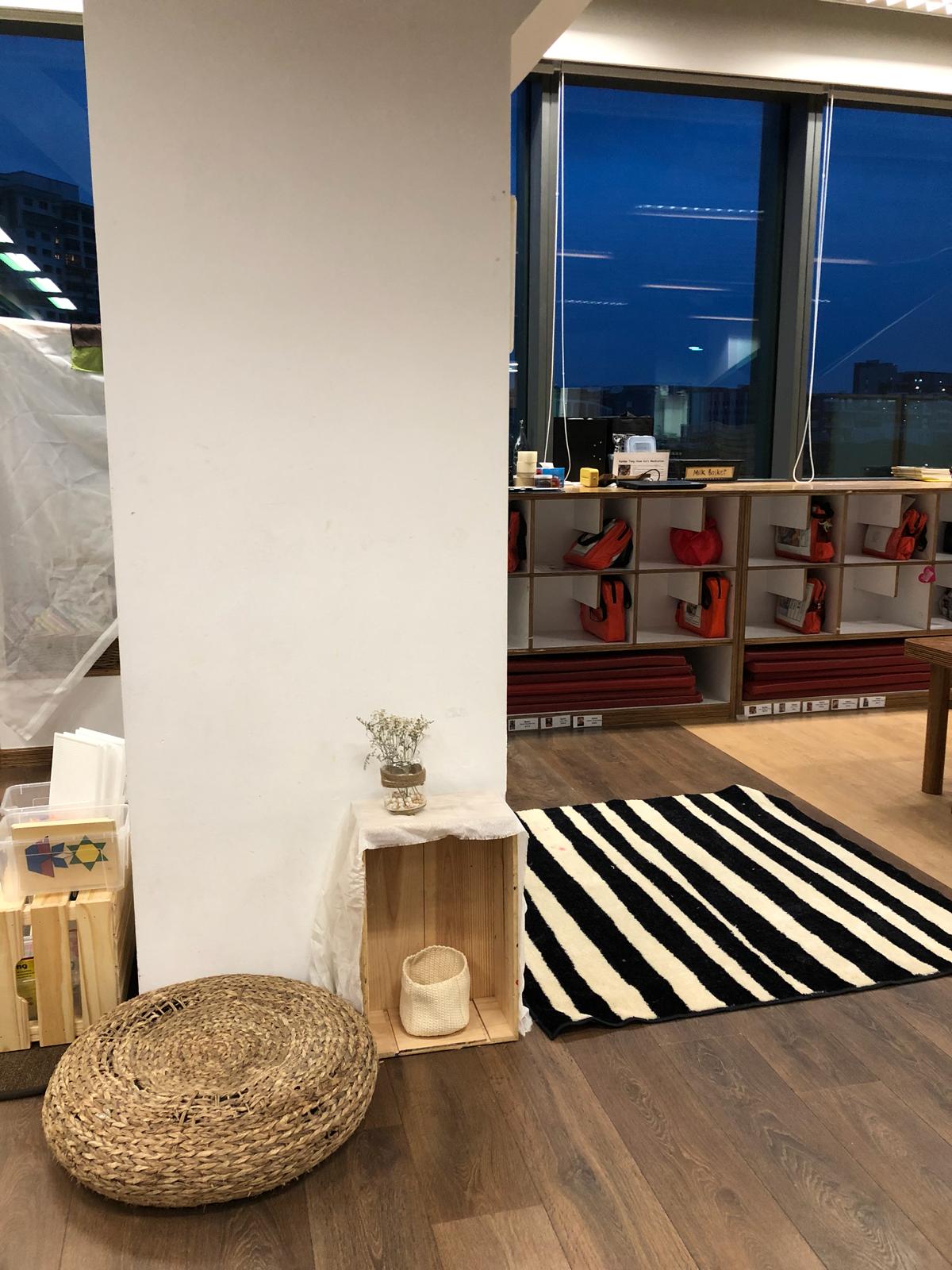
To usher in the new year, we have been redesigning our classroom environment! Here are some photos of the Nursery Class, it is still a work in progress. We can't wait for the New Year! 


Year End Event (2019)


This year has been pretty special to me. While I did participate in Year-End Event before, I found this year’s event the more meaningful of them all. Of course, this bunch of children has been the dearest to me, being with them since they were toddlers! We held a two-day event – A K2 Graduation Party for the families only, and a Carnival for the entire school. To know more about the event, here is the documentation that I’ve written for this year’s event😊


We all have different gifts, so we all have different ways of saying to the world who we are - Fred Rogers

At the Cove, we take on the lens of the socio-constructivist approach where children are active participants in their learning and learning is co-constructed with the children and families through experience, routines, and interactions. Through the process of Year-End Event, children are facilitated to think of their own ideas and beliefs before listening and communicating with others. As we kick-start the planning process of Year-End Event, we posed questions to our children for them to be aware of their needs and interests – What are you good at? What is the class comfortable in doing? It was an experience that invited our children to identify and reflect on their own ideas and opinions. As a class, we shortlisted possibilities that we would like to pursue such as games, art, and food. Their responses were that a Year-End Event is “about growing up”, “about being happy”, “a celebration for us”, “showing others what we can do”.  Their responses tell us that the event is a joyous occasion to celebrate as well as to showcase. They also talked about how the event is to for us to “say bye-bye”, and “to say thank you to all our friends and teachers”. Finally, they also talked about it being an event to make daddy and mummy proud.

Why are we having a Carnival? What are the values of our Carnival?


We teach who we are - John Gardner

The teachers went on to think about what some learning dispositions are we want to infuse in the process. We would like to provide opportunities for children to invent, innovate and imagine, to collaborate and be compassionate, to celebrate and enjoy. We want to help children see the possibilities of a Carnival to embed their interest in Game, Food, and Art alongside with these learning dispositions. Further, the possibilities of having a Carnival allow children to apply their structured skills to strength the emergent project. The planning process allows for play and interaction experiences, which act as vehicles for learning and opportunities for authentic assessment. For example, poster-making, writing, reading, and measuring.

What are our plans? How did we do it?

Beyond just games, art and food, the class teachers deepen the concepts with two key learning points in the English Curriculum. The concept of the Ugly Food, a K1 Emergent Project, and our ABC Book, a K2 Literacy Project, was included in the repertoire of ideas.

Our plans with Ugly Food Booth – Presenting our children’s voices


At the initial stage of our Ugly Food Booth, We looked at the planning process we need to make this idea to fruition. Our children recalled Aunty Wendy, a Singapore Food Rescue Volunteer, who shared about Ugly Food and though the food looks ugly, it tastes the same as the others. Thus, we wrote to the Singapore Food Rescue to ask for carrots, potatoes, and fruits that no one wants, so we can make carrot cake, mashed potato and fruit juice to sell. Though the Singapore Food Rescue was not able to contribute and commit with us, we managed to work with the Singapore Ugly Food Rescue on our mini-project. The Singapore Ugly Food visited our classroom and took this opportunity to review the recipes our children had created while sharing about edible and non-edible ugly food! With our edited recipes, we experimented with the flavors in school with our friends and teachers. We, then, invited all our families to help to design the recipes that will be put up on display at the Carnival.

In the last few weeks leading up to the Carnival, we shortlisted the materials (e.g. signboard, tables, bins) and equipment (e.g. juicer, blender) we need for our Ugly Food Booth. As a class, we considered where would be an ideal location to host our booth. After thoughtful discussion, consideration of needs of younger children, scouting of venue around the school, our friends decided to host our booth at the outdoor area, behind the blue house. The location was chosen as it has hand-washing basins, electrical power points, and sufficient space to place our fruits and signage. Based on their layout plan, they worked together to draw and describe the positioning of the materials and equipment (e.g. in front of, next, behind, besides) within the space. We went on to use play dough to make our plans into three-dimensional artwork to check if the layout was possible as well. 

Our plans with our ABC Book – Presenting our children’s thinking


Lively intellectual curiosities turn the world into an exciting laboratory and keep one ever a learner – Lucy Mitchell

Considering our children’s strong interest in books, we have been embarking on a few authors’ studies to help us identify the different writing styles and illustrations. We went on to read and explore more writing styles by Shel Silverstein. Dr. Seuss, Roald Dahl. As we continue to explore the different types of writing styles, we were inspired by Oliver Jeffers’ writing style in “Once Upon an Alphabet” – when the beginning letter helps starts the story. In the process, our children shared, “A is for Aunty Susan, she cooks for us every day”, “A is also for Aunty Wendy, who teaches us about Ugly food”, “B is for Butterfly, for taking care of it and setting it free”. It was a meaningful process as we contribute to our most significant moments in our preschool years in an alphabetical manner. In the process, we faced a huge challenge in finding words that comes up with X, Y, Z – it took us four weeks to come up with the ideal words but we did not give up. We went on to write, illustrate, edit and finally publish it.

Our plans with our Graduating Performance – Presenting our children’s repertoire of movements ideas

As we inched closer to our Graduation Party, we observed how our children are exhibiting different movement repertoire through the different children’s songs. We saw them engaged in different levels (high, low, and middle), speed (fast and slow) and direction (forward, backward, sideways). Hence, we introduced an empowering lyrical song to our children – “Roar” by Katy Perry and invited them to use their movement to represent ideas they have. Our children shared that the song is a hopeful reminder on being ourselves, to stand up whenever we fall down and be fearless in overcoming obstacles.

Teachers’ Reflection: Who are they? What have we achieved thus far?


As their teachers, we understand their individual temperament and traits and it got us thinking about how we should facilitate them in the process of planning and carrying it out. We noticed that our children have many great ideas, but they do not follow through their plan. We quickly identified that our children need to know how to make good decisions and follow a plan, albeit a poor plan. Hence, we were excited to use the idea of a Carnival to help facilitate them to plan, decide and improve on their work. They learn that work takes time and hard work pays off. Most importantly, they show their sense of inventiveness and perseverance in their work. Beyond just contented faces, it was gratifying to support our children in making their ideas into realities.

Saturday, March 24

Moral Dilemna


In late February, my teaching partner and myself held a Parents' Workshop on Moral Developing in Young Children - we used examples, theories and strategies to nurture our children to perform good reasoning and basically be good. Workshop went well, reviews were good but it did not sit well with me after. After three years of teaching, I learnt that this is an education business not education, I feel that your teaching partner makes or breaks you, I experienced that change is the only constant, I think passion will run out. 


Fourth year, what to look forward too? To leave or stay. 

Sunday, December 10

Crisis

​
It has been a wonderful journey with my toddlers, I have loved every moment of every day with them. The parents support is amazing and I am so thankful for the parents. They motivates me, they inspires me. Most importantly, they value and appreciate me and my work.

To commence a new academic year, I will be taking a not-so-new class, I know them since they were tiny toddlers, was there as their caregiver for almost two years, watched them get toilet-trained, taught them how to speak and write and many stuffs. I guess life is a full circle, what comes around goes around.  

I wonder why are teachers often underappreciated. How can families and school empower each other? What is the purpose of work when passion weans off? Is this what they called quarter-life crisis? 

Saturday, May 6

The Green School and The Anak Atelier

Alongside with my work colleagues, we set off for a long weekend cum pubic holiday trip to Bali, Indonesia. Personally, we spent time touring around the place - life was so different in a developing country, you realized how lucky you are when you're from Singapore, but also how mollycoddled you are, and also how protected you are. Professionally, we visited two very beautiful and successful international schools - The Green School and The Anak Atelier. There was simply so much to learn from these schools, ultimately, it is about what we can bring back to our local context. 


1. What is Sustainability in Singapore? Potential in Early Childhood.

At Green School, you could clearly see self-sufficiency of the large campus with abundant of natural resources. Natural resources are planted or attained within the local community - teak, bamboo, wood, plastic, fabric. Beyond just using natural resources in learning corners, all their building structures were made with bamboos! Learning takes place mainly outdoors and they values conservation of endangered species, planting their own food resources and managing long-term recycling projects. At Anak Atelier, we see re-purpose in recyclables ; using the same tools for a different purpose. Unlike recycling, reducing and reusing, re-purpose seeks new meaning in the recyclables. For instance, using plastic bottles as eco-brick. Singapore being one of the 'greenest' city in the world, honestly, we lack in educating ourselves on sustainability. I believe more work and efforts has to be invested to achieve our sustainability development goals. In terms of preschool education, there must be education and advocacy on protecting the planet. My suggestion - start by having schools without air-conditioning. 


2. Cultural, Tradition and Heritage. What is Singapore about?

At both Green School and Anak Atelier, you see that they prioritize outdoor play, specifically mud play, they have their own mud field. Why? Their rationale was genius because ingenious Balinese are farmers and spent most of their time in paddies fields. Mud Play was their culture, their comfort zone and their kind of lifestyle. Akin to water play and sand play, mud play promotes integrated learning and development. In my opinion, mud play would not be a smart idea in our local schools due to our culture and resources. We can go back to our heritage and discover who are we as a country, what is our history teaching us? Also, in foresight, if technology is our top priority, should preschools begin introducing coding and programming at a young age? 

In both schools, we see the strong collaboration with parents and community as well. Parents volunteer as tour guides for the school's open house and diversity of their cultures are embraced and evident. In terms of community involvement, it is beyond just going for a community walk. Their curriculum sets for children to do more for their community through sustainability projects, education and advocacy while  the community provides local resources to the school continuously. This reminds us that we must tap on our community resources - beyond just textbook knowledge, what can we do for the community? 


3. Outdoor Play as a core curriculum

Be it rain or shine, Balinese children spends at least half their school time learning about the natural world around them. There are substantial research on the importance of outdoor play for our young children and I wonder when would our curriculum shift out from paper and pencil. Sadly, outdoor play has often been compromised for core curriculum learning in our local schools. Simply put, we care too little on their physical development (except their writing and penmanship), we plan too little physical space for our children to utilize. If our land is scarce for large outdoor play area, what are some creative potential strategies? Co-sharing? Intentional public areas? 


I like how Indonesia has a rich and complex culture. Being a developing culture, they embraces, preserves and innovates their own natural resources and cultures. I'm in the amidst of planning for a potential childcare/schools visit in Shanghai and London in October, I would love to get in touch with you if you have any suggestions! 

New Bride in Town

It has been a hectic yet fulfilling 2017 so far. First and foremost, I married to the man of my dreams in March, a day after my 24th birthday. I must say we have been understanding and supportive partners in the entire process of the wedding - thankfully, both our ideas and mindset were aligned. We had our Solemnization with Mr Stephan Chia at National Museum of Singapore, Flutes. The ambiance, food and event line up was elegant yet simple - causal chatters among high-end service. The Flutes Team headed by Ms Eileen was professional to cater to our every needs. We were blessed with helpful friends and family members and we hope our guests enjoyed themselves as we much as did! Here are two highlights beautifully taken by Marcus Low (Instagram: ahliuxuekai).


That's all! Look out for my next post on my recent Learning Journey to Bali! 

Sunday, January 29

Happy Chinese New Year

How times flies! I started this writing space to document my thoughts as a fresh early childhood educator, learning to surviving! As I look forward to my third year of teaching, let's look back on my first and second year. 


First Year was indeed, survival mode. 

Toddlers - food allergies, safety, picking eating, diaper rashes, hygiene, self-help, routines, parents, newborns...I failed, reflected and learnt! Taking an hour train ride during peak hour to get to work, that took time to get used as well. 

Second Year of teaching was about advocacy, for me. 

When I first received news that I would be a mentor to a student-teacher, I was unsure. I have worked with great mentor, and I wasn't sure if I could be of useful help to her. Asides from sharing my knowledge and experience with her, it was mostly about being a positive support for her to be successful. Being there for her to bridge her communication with parents, helping her to observe and understand the toddlers better and helping her to make decisions upon her imminent graduation. I was so blessed to have great teachers and recommendations throughout my academic career, and I was so thankful for my opportunity to help and inspire her along the way, paying forward. 

Advocacy through parent workshops too - oh boy. I followed the toddlers up in my second year and yes, the parents finally listened to some of my nagging. Great! Like many other parents, I have met parents who do not believe or practice learning through play, they wanted phonics, additions, weather for three-years-old. Along with my team, we advocate for early literacy through stori-gami, authors' study and wordless picture book. Authors' Study on Julia Donaldson was too much fun! With Room on the Broom, The Smartest Giant in Town and A Squish and A Squeeze, the toddlers displayed strong interest in literature, creative story-lines and confidence in storytelling! 

We advocate for early numeracy through block play, penne and macaroni play, class party, and many more. 
We advocate for early science through ice play, rain play and class pets and more. 
Lastly, I've worked with Times Publishing on a short ad-hoc article on Negotiating Effective with Young Children, you can browse through here: https://www.goguru.com.sg/cms/index.php/articles/details/negotiating-effectively-with-your-child.  Go goguru.com > article > Negotiating with Young Children. Do support them and they do provide great learning and teaching resources and workshops. I went to Austria for an overseas trip with AECES too, and I am still learning to bring the best from there into our local context. Takes some time and tweaking! 

Looking forward to an exciting third year! 

(PS: I am getting married in March, let's see how work-life balances?)